Dental Implant Procedures/Timeline
What are the different types of dental implant procedures?
There are multiple options to choose from when considering dental implants for replacing missing teeth. Each patient has unique requirements, and the selection of dental implants should be tailored to meet your specific needs. It is crucial to have a consult with a experienced dental implant dentist to understand the various types of dental implants and the one that is most suitable for you.
Here are the main types:
This is the most common type of dental implant. These implants are placed directly into the jawbone and typically made of titanium. Once the surrounding gum tissue has healed, a second surgery is needed to connect a post to the original implant. Finally, an artificial tooth (or teeth) is attached to the post individually, or grouped on a bridge or denture.
Targeted for people who need full upper and/or lower restorations, the All-on-4 technique uses four titanium dental implants to secure the prosthetic teeth in place. It’s particularly noted for its ability to provide a full set of replacements on minimal implants and usually does not require bone grafting. This can be a more efficient and less invasive procedure than traditional implant methods.
Also known as same day implants or Teeth in a Day®, these implants allow the placement of a temporary tooth during the same appointment as your dental implant placement. This can be a great option for patients who have enough natural bone and an implant secure enough to support immediate placement and pressure on the new temporary tooth.
Used primarily in cases where there is insufficient jawbone for the placement of regular dental implants, zygomatic implants are longer than traditional implants and anchor into the zygomatic bone (cheek bone) rather than the maxilla (upper jaw). They are typically used when bone loss in the jaw is so extensive that other implants cannot be used without a bone graft.
Each type of San Antonio dental implant offers different benefits, and the right type for a patient will depend on the specific needs of their dental health, the amount of available bone, and their overall health condition. Consulting with Dr Woods Woolwine will help you decide on the most appropriate type of implant and procedure.

what you might expect
The timeline for San Antonio Dental Implants will vary widely depending on the individual’s dental health, the type of implant procedure, and whether additional preparatory surgeries like bone grafting are needed. Here’s a general overview of what you might expect during the dental implant process:
Assessment and Planning: Dr Woolwine will conduct a thorough examination, which may include X-rays or 3D images, to assess the health of your jawbone and gums. This is to determine if you are a good candidate for dental implants and to plan the procedure.
Bone Grafting: If there isn’t enough bone to support the implants, a bone graft may be necessary. This involves placing new bone material into the area to strengthen it. The healing time for a bone graft can vary from a few months to over a year, depending on the amount of grafting needed.
Tooth Extraction: If the tooth being replaced is still present, it will need to be extracted. Generally, some healing period (a few weeks to a few months) is required after an extraction before implant placement can proceed.
Surgery: The implant, a small titanium post, is placed into the bone socket. This surgery usually requires local anesthesia and possibly sedation.
Healing and Osseointegration: After the implant is placed, a period of healing (osseointegration) begins, during which the jawbone grows around the implant, anchoring it securely in the jaw. This process can take anywhere from 3 to 6 months.
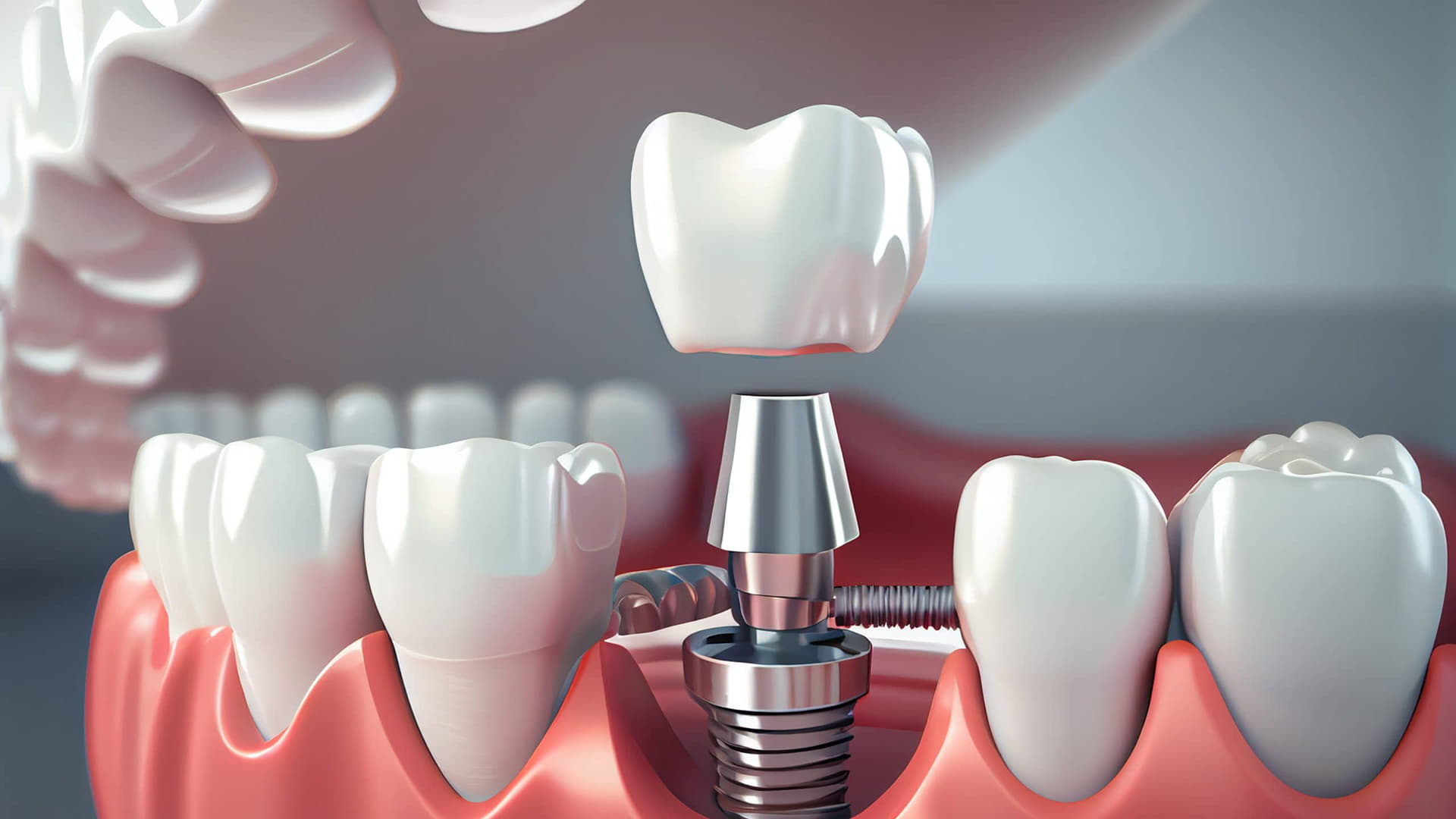
After the implant has bonded with the jawbone, a second minor surgery might be required to place the abutment — the piece where the crown will eventually attach. This typically involves reopening the gum to expose the implant, attaching the abutment, and then allowing the gum tissue to heal around it, which might take a few weeks.
Final Impressions: Once healing is complete, dental impressions are made to create the crown — your realistic-looking artificial tooth.
Crown Placement: The crown can be either fixed permanently or attached in such a way that your dentist can remove it for cleaning and repairs.
After the placement of the crown, you may have follow-up visits to ensure the implant is functioning well and to check on the health of your implant, gums, and other teeth.
Total Duration
The total time from start to finish can range from about 5 months to over a year, particularly if extensive bone grafting is needed or if there are other complexities. Immediate load implants or same-day implants might shorten this timeline significantly, offering a quicker solution for suitable candidates.